


Our
History
Constant
change
Since its founding in 1892, Papierfabrik Nossen has continuously evolved—from a regional craft business into a specialised production site for high-quality filter and specialty papers. Each era brought technological advances, economic upheavals and new perspectives. What has remained is the close connection to the region and the knowledge of the art of papermaking—an important piece of industrial history that is still alive today.
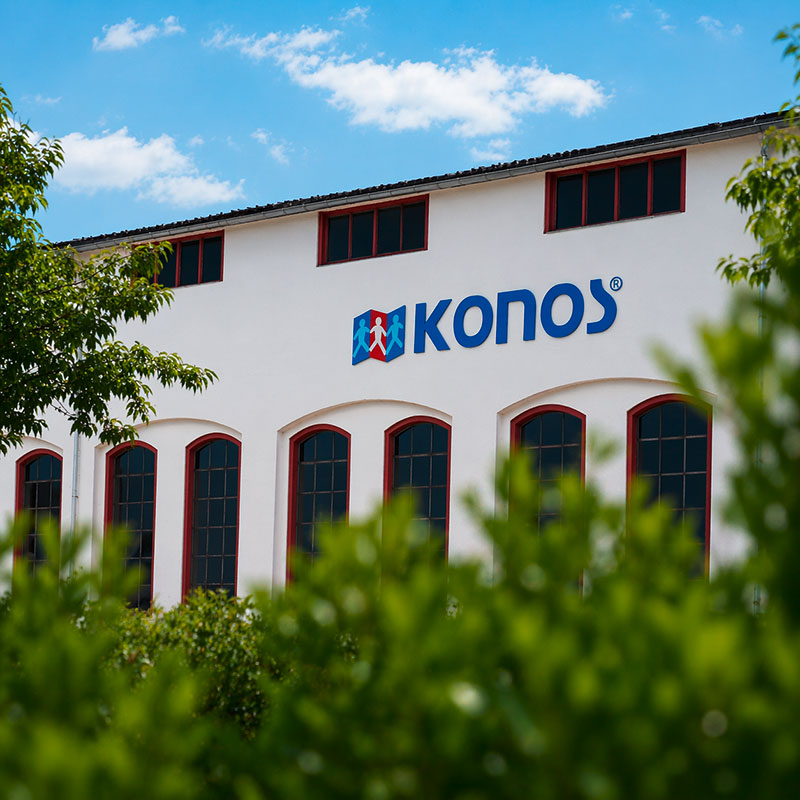
More than 160 years of paper processing on the Freiberger Mulde in Nossen
Investing in growth and the future
Today & tomorrow
Ongoing investments in automation and modern production processes to ensure long-term sustainability.
Sustainability
Installation of a photovoltaic system as an active contribution to CO₂ reduction.
Innovation & new markets
Expansion of automated packaging systems and continuous expansion of storage capacity at the site.
Innovation & new markets
Introduction of new products such as the “universal coffee filter”, as well as modern packaging solutions to open up international markets.
Expansion of production & product range
Investments in new production lines and high-performance machinery enable the expansion of the portfolio—from coffee filters and specialty and dental papers through to baking paper.
New corporate group & quality
Integration into the corporate group of Papierfabrik Netstal (Switzerland), with a focus on high-quality paper production, sustainable resources, the use of clear mountain spring water, and climate-friendly electricity from hydropower.
Realignment and specialisation
After 1990, the site was initially operated as part of Dresden Papier AG, later as PACLAN Papierprodukte GmbH, and from 2001 as CeDo Papierprodukte GmbH. In 2002, operations were converted to further processing, particularly for coffee filters. In 2006, paper machine operations ended; processing continued. In the same year, the site was acquired by Papierfabrik Netstal and continued as KONOS GmbH. Paper production in Nossen was discontinued, while Papierfabrik Netstal continues to produce specialty crepe paper to this day, which is further processed at KONOS GmbH in Nossen into various coffee filters and other paper products.
Integration into combine structures
In the 1960s and 1970s, the company became more closely integrated into the central organizations of the paper industry. Nossen specialized in specific types of paper and, from 1981, was part of the Heidenau combine as the Nossen plant.
Restructuring and modernisation
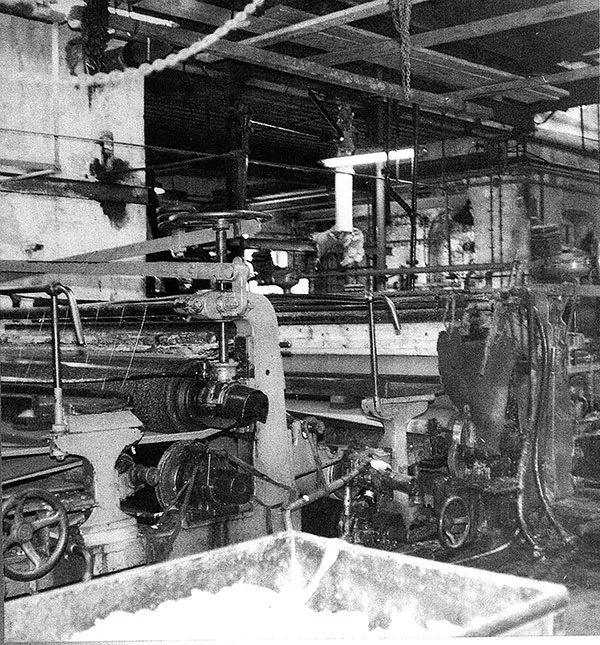
The conversion into the VEB Papierfabrik Nossen marked the beginning of a phase of technical modernization. Employees repaired older equipment before modernization measures were implemented between 1956 and 1957. Safety measures and production targets were expanded.
Resumption after the end of the war
The wood-grinding mill resumed operations in August 1945. Despite shortages of materials and personnel, paper production gradually resumed from 1946 onward. Technical failures and damage led to temporary interruptions in the following years. In 1956, the company was transferred into public ownership.
Production under state control
Starting in 1933, the factory was part of the centrally planned economy. The product range primarily included packaging and administrative papers. A shortage of raw materials and restricted working conditions led to production being discontinued in March 1944.
Economic fluctuations
After the war, operations resumed. Electrical power and new equipment improved production, but inflation and the global economic crisis caused recurring strains. Despite difficult conditions, manufacturing continued.
Technological progress and the war years
At the beginning of the 20th century, the facility underwent modernization, electrification, and expansion. The First World War was accompanied by declines in production; manufacturing shifted in part to military goods. By 1918, only one machine was still in operation.
Establishing a paper mill
In 1892, Karl Reinecke founded the Nossen Paper Mill. Using hydropower from the Freiberger Mulde, straw paper was produced for packaging. Workshops, administrative buildings, and workers’ housing were built, firmly establishing the site.
Foundation and initial production
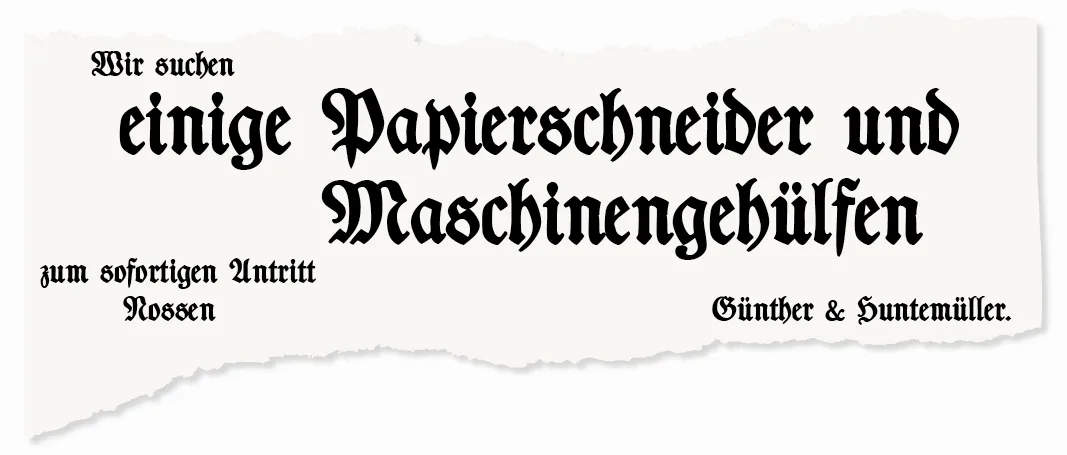
In 1857, Johann Georg Ernst Starke and Georg Ludwig August Walther purchased land below the mill and established a paper-making operation, which began production in 1858. After a brief phase of growth, changes in ownership and economic difficulties led to a temporary shutdown in 1864.
From mill to industry
After the dissolution of the Nossen monastery in 1540, the “Rothe Mühle” became state property. In 1831, Ernst Ferdinand Philipp acquired the site, laying the foundation for commercial use. In the 19th century, this developed into a location with economic growth potential.
* The image is a find from a private collection.